Why Your Home Workout Keeps Dying on a Tuesday (And the Science That'll Save It)
You started strong. Monday was great. Tuesday, pretty solid. By Wednesday you told yourself you'd "make it up on the weekend," and somewhere around Thursday the resistance band ended up under the couch next to a phone charger and a forgotten granola bar.
Sound familiar? You're not alone — and you're definitely not lazy.
The reality is that home workouts fail at a measurably higher rate than gym memberships, and the reason has almost nothing to do with willpower. It has everything to do with how our brains are wired, and how your home environment is — accidentally — working against you.
Let's break it down.
The Gym Had One Job You Didn't Notice
When you drove to a gym, the commute itself was doing something important: it was creating a transition ritual. You left your house. You changed your context. By the time you walked through those doors, your brain had already shifted gears.
Behavioral psychologists call this a "contextual cue" — an environmental trigger that signals your brain to switch into a particular mode. The gym parking lot, the front desk scan, the smell of rubber flooring — all of it was conditioning you to work out before you even touched a weight.
At home, there's no parking lot. There's no scan. There's just... your living room, which also happens to be where you watch Netflix, eat lunch, and scroll your phone. Your brain doesn't automatically know it's "workout time" because nothing in the environment is telling it that.
This is the core problem. And it's fixable.
Motivation Isn't the Engine — It's the Spark
Here's something worth sitting with: motivation is overrated as a long-term strategy.
Research from habit formation studies — including work from behavioral scientist BJ Fogg at Stanford — consistently shows that motivation is unreliable. It spikes when you're excited about a new goal and craters the moment life gets busy, stressful, or just plain boring. Relying on motivation to get you off the couch every day is like relying on a lightning strike to charge your phone.
What actually sustains workout consistency is habit architecture — building systems where the behavior becomes nearly automatic. The goal isn't to feel pumped up every day. The goal is to make working out at home the path of least resistance.
That means designing your environment, not just your motivation.
Design Your Space Like It Means Business
You don't need a dedicated home gym (though if you have the space, great). What you need is a designated zone that your brain starts to associate exclusively with movement.
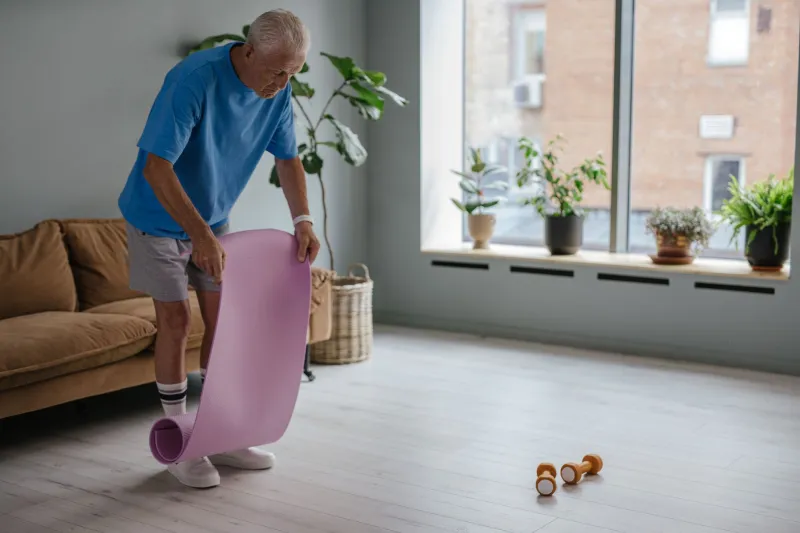
This could be a corner of your bedroom. A cleared section of the garage. Even a specific yoga mat rolled out in the same spot every time. The physical consistency matters. When that mat is out, it's workout time — full stop.
A few specific tactics that work:
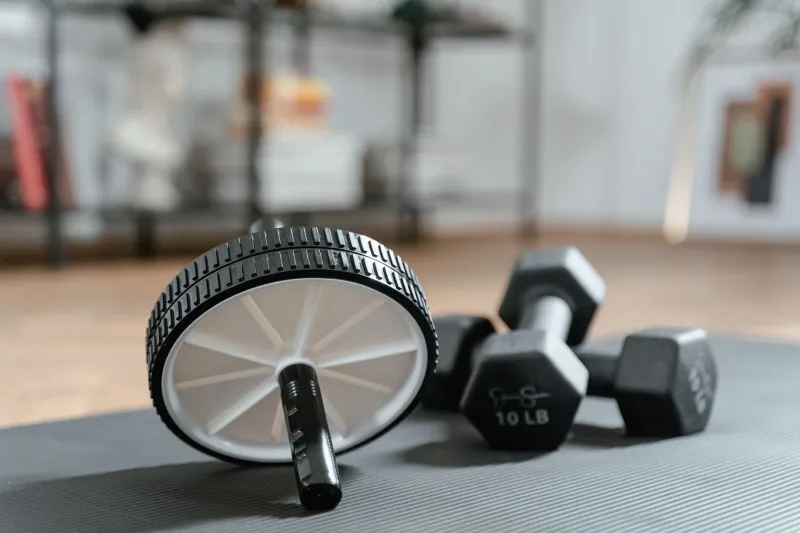
- Leave your equipment visible. Dumbbells tucked in a closet require a decision every time. Dumbbells sitting next to the TV require zero decisions. Visibility reduces friction.
- Use a "trigger object." Put your workout shoes next to your coffee maker. The moment you see them in the morning, they cue the intention. It sounds almost too simple, but environmental design works precisely because it bypasses conscious decision-making.
- Set a consistent start time. Even more than location, time is one of the strongest contextual cues humans respond to. 7:00 AM workouts that happen every day train your brain to expect movement at 7:00 AM.
The Accountability Gap (And How to Close It)
At a commercial gym, there's subtle social accountability baked in. People see you. You see other people. There's a trainer who recognizes your face. None of that exists in your spare bedroom.
But you can manufacture accountability — and research suggests it doesn't even have to involve another person watching you in real time.
Some effective approaches:
Commitment devices. Tell someone your workout plan for the week. Even a casual "I'm doing a 30-minute workout three times this week" text to a friend creates a psychological commitment. You've made it real by saying it out loud.
Streaks and logs. Tracking your workouts — even just marking an X on a paper calendar — activates what psychologist B.F. Skinner identified as variable reinforcement. You start protecting the streak. Missing a day feels like losing something, which is a more powerful motivator than gaining something (thanks, loss aversion).
Online communities. Fitness subreddits, Discord servers, and social fitness apps like Strava connect you with people who are doing exactly what you're doing. You don't need them in your living room. You just need to know they exist and that you're part of something.
Reframe the Room
One of the most underrated mental shifts you can make is to stop treating your home workout as a consolation prize.
A lot of people carry a quiet belief that home fitness is the "lesser" version — something you do when you can't get to a real gym. That framing is a slow killer of consistency, because your brain will always find a reason to skip the thing it considers second-tier.
Flip the script. Your home setup has zero commute time, zero wait for equipment, zero judgment from strangers, and 100% control over the environment. That's not a compromise — that's an advantage. When you genuinely believe your home is a legitimate training space, you treat it like one.
Try this: give your workout space a name. Seriously. Even something dumb like "the pit" or "training HQ." It sounds silly, but naming something signals ownership and intention. Your brain responds to that.
The One-Minute Rule for Bad Days
Finally, here's a strategy pulled straight from behavior change research that's almost embarrassingly effective: on days you don't want to work out at all, commit to just one minute.
Put on your shoes. Step into your workout space. Do one minute of movement.
Most of the time, you'll keep going. But even if you don't — you showed up. You maintained the identity of someone who works out at home. And identity, according to habit researcher James Clear, is the actual engine of long-term behavior change.
You're not trying to complete a workout every day. You're trying to be someone who works out at home. That's a different goal, and it's one that compounds over time in ways that no single session ever could.
Consistency isn't a personality trait. It's a system. Build the system, and the Tuesday slumps start taking care of themselves.