Indoor Running for People Who'd Rather Do Literally Anything Else: A Beginner's Honest Guide
Let's be real. The classic "Couch to 5K" pitch assumes you're cool with lacing up and jogging through your neighborhood while your dog tries to trip you and a car honks from three feet away.
But what if you're not? What if the outdoor running experience — the weather, the sidewalk judgment, the shin splints from cracked pavement — sounds less like a wellness journey and more like a punishment?
Here's the thing: you can build real running fitness without ever stepping outside. Whether you've got a treadmill, a small apartment, or nothing but floor space and determination, this guide is for you.
Why Indoor Running Is Actually a Great Starting Point
Before we get into the how, let's kill the idea that indoor running is somehow a lesser version of the real thing.
For beginners especially, training indoors removes a stack of variables that make running harder than it needs to be. Uneven terrain, air quality, humidity, Texas summers, January in Minnesota — all of that is gone. You control the pace, the surface, and the environment completely.
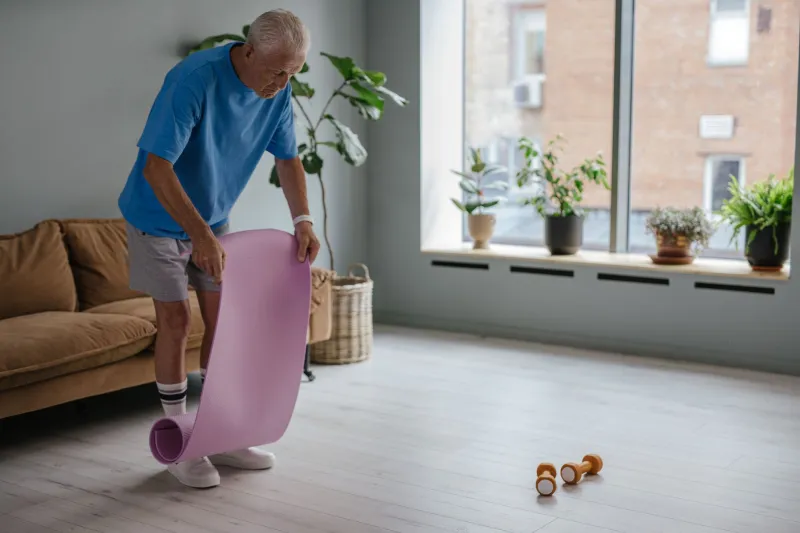
For remote workers and desk-heavy professionals, this matters even more. You're not commuting to a track. You're not scheduling around daylight or weather windows. You roll out of your home office, warm up in your living room, and get it done. That's not a workaround — that's efficiency.
Also worth noting: a lot of beginners cite social anxiety as a real barrier to starting a running habit. Running outside means being seen — struggling, slow, red-faced. Indoor training removes that entirely, which means more people actually start and actually stick with it.
Your Equipment Options (From Zero to Treadmill)
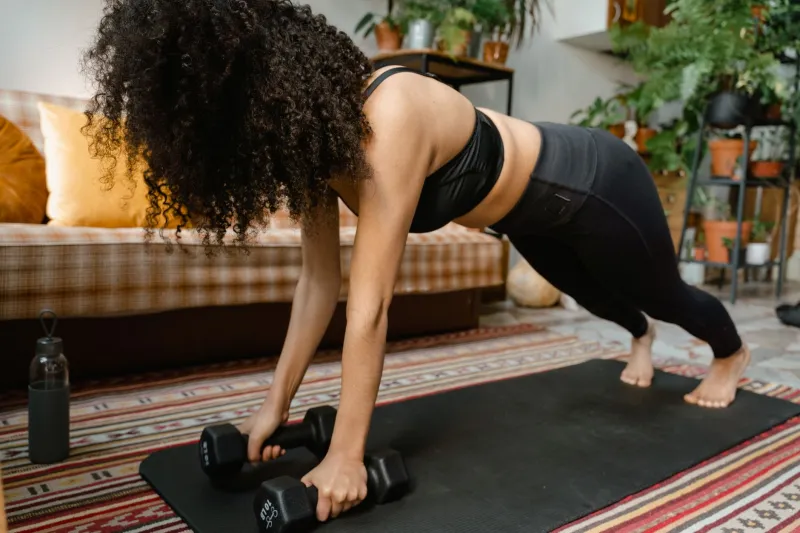
No Equipment: High-Knee Running in Place
Yes, this counts. Running in place with high knees — bringing each knee up toward hip height — activates the same primary muscle groups as outdoor jogging: quads, hamstrings, hip flexors, calves, and core. It also gets your heart rate up fast.
Is it identical to road running? No. But as a cardiovascular base-builder for beginners? Absolutely effective. You can do this in 4x4 feet of floor space. No excuses needed.
Tip: Use a mat for cushioning and wear proper shoes. Your joints will thank you.
Low-Tech Option: Jump Rope
Jump rope is criminally underrated as a running alternative. It builds the same aerobic endurance, improves foot strike rhythm, and burns a comparable number of calories per minute. A decent jump rope costs $15-$30 and fits in a drawer.
For beginners, interval-style jump rope work (30 seconds on, 30 seconds off) mirrors the run/walk structure of most beginner running programs perfectly.
Mid-Range Option: Mini Stepper or Stair Climbing
If you have stairs in your home, you already have a cardio machine. Stair climbing is high-intensity, builds serious leg strength, and transfers directly to running fitness. A basic mini stepper — available on Amazon for around $30-$60 — gives you the same benefit in a compact footprint.
The Gold Standard: A Treadmill
If budget allows, a treadmill is the closest 1:1 indoor running experience you'll get. Modern options range from basic folding models around $300-$400 to more robust machines in the $800-$1,500 range. For beginners, a mid-range folding treadmill is more than enough.
Key treadmill tip for beginners: Set the incline to 1-2% to better simulate outdoor running mechanics. A completely flat treadmill actually changes your stride in ways that can cause issues if you ever transition outside.
A Beginner Indoor Running Program (8 Weeks)
This program is designed for someone starting from minimal fitness. It follows a run/walk progression — the same structure used in traditional Couch to 5K programs — adapted for indoor training.
Frequency: 3 days per week with at least one rest day between sessions.
Weeks 1-2: Building the Base
- Warm up: 5 minutes of walking or light movement
- Alternate 1 minute of running (or high knees) with 2 minutes of walking
- Repeat 6 times (18 minutes total)
- Cool down: 5 minutes of easy walking
Weeks 3-4: Extending the Run Intervals
- Warm up: 5 minutes
- Alternate 2 minutes running with 2 minutes walking
- Repeat 5 times (20 minutes total)
- Cool down: 5 minutes
Weeks 5-6: More Running, Less Walking
- Warm up: 5 minutes
- Alternate 3 minutes running with 1.5 minutes walking
- Repeat 4 times (18 minutes total)
- Cool down: 5 minutes
Weeks 7-8: Approaching Continuous Running
- Warm up: 5 minutes
- Run for 5 minutes, walk for 1 minute
- Repeat 3-4 times
- Cool down: 5 minutes
By the end of week 8, most beginners can sustain 20-25 minutes of continuous running — which is exactly the fitness base you need to complete a 5K.
How to Progress Without Getting Hurt
The number one beginner mistake in any running program is increasing too fast. A common rule of thumb: don't increase your total weekly running time by more than 10% per week.
Other things to watch:
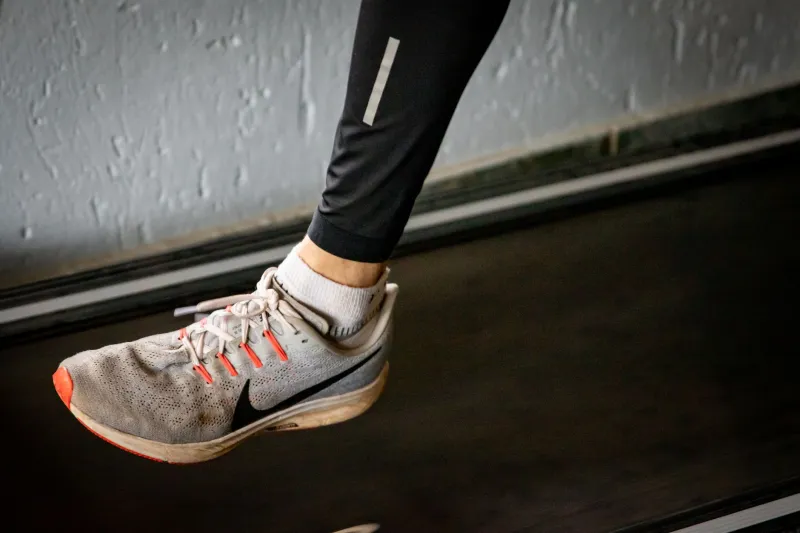
- Shin splints are common early on. If your shins ache, take an extra rest day and check your shoes. Running shoes matter, even indoors.
- Knee discomfort often signals overstriding. Focus on shorter, quicker steps rather than long lunges.
- Boredom is real with indoor running. Rotate between podcasts, playlists, and TV shows to keep sessions engaging. Many treadmill runners swear by saving a specific show exclusively for workout time — it becomes a reward.
Making It Feel Like Your Thing
The biggest mental hurdle with indoor running isn't physical — it's the story you tell yourself about whether this "counts." It counts. Cardiovascular adaptation doesn't care whether you're on a treadmill in suburban Ohio or running a trail in Colorado.
Set small, specific goals: "I want to run for 10 minutes without stopping by the end of this month." Track them. Celebrate them. Build an identity around being someone who runs — even if that running happens in your garage at 6:30 AM in last year's gym shorts.
The commute to your workout is the shortest one you'll ever have. Might as well use it.