Too Much You: How Watching Yourself Work Out at Home Is Quietly Killing Your Gains
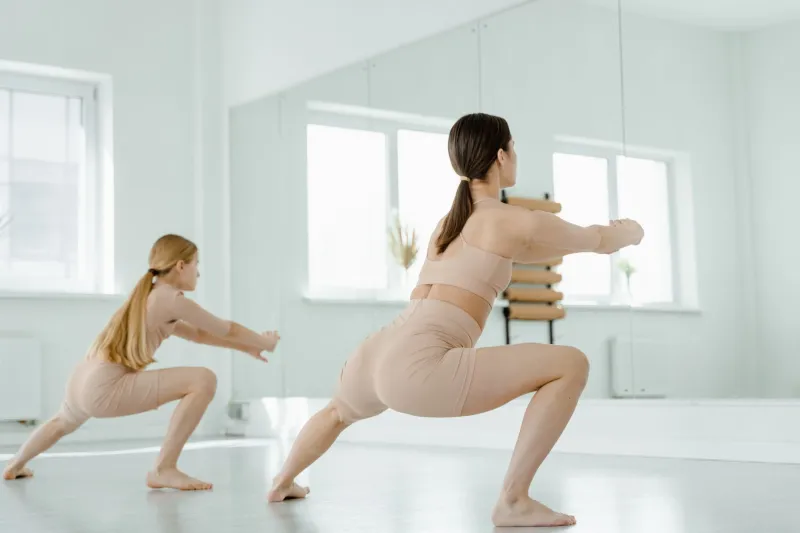
Here's a scenario that probably sounds familiar. You're halfway through a set of lunges, you catch a glimpse of yourself in the mirror across the room, and suddenly you're not doing lunges anymore — you're judging lunges. You're critiquing the angle of your knee, comparing your current body to some imagined version of yourself, and wondering if your form looked this rough last week. By the time you snap back to reality, you've lost count, your rhythm is gone, and the workout feels like it's already falling apart.
Welcome to what we're calling the visibility trap — and if you've set up any kind of home workout space, you're probably living in it.
The Mirror Myth Nobody Talks About
Gym mirrors have a reputation as essential tools. Form checks, alignment cues, making sure your back isn't rounding on a deadlift — mirrors seem like a no-brainer addition to any workout space. And sure, used correctly, they have genuine value.
But here's the problem with mirrors at home: you can't turn them off.
At a commercial gym, you move between stations, zones, and equipment. Your relationship with the mirror is intermittent. At home, especially in a small apartment or converted bedroom, you might be staring at yourself for the entire workout. That's a very different situation, and research into self-focused attention suggests it's not a neutral one.
Studies on performance anxiety consistently show that excessive self-monitoring — watching yourself do a task while simultaneously evaluating how well you're doing it — increases mental load and can actually degrade physical performance. Athletes in high-pressure situations often "choke" not because they forgot how to perform a skill, but because they started consciously watching themselves do it. The brain, flooded with self-referential feedback, loses the smooth, automatic quality that makes movement efficient.
Now apply that to your Tuesday morning squat session. You're not a nervous athlete on a big stage, but the mechanism is the same. Every time your eyes drift to your reflection and your brain shifts into evaluation mode, you're pulling cognitive resources away from the actual workout.
Your Phone Is Making It Worse
Mirrors are just the beginning. The modern home workout space is a surveillance system pointed entirely at the person using it.
You've got your phone propped up for a workout video — front-facing camera accidentally on. You've got fitness apps that want you to record your sets. You've got the dark screen of your TV acting like a murky mirror between exercises. Some people set up actual cameras to review their form later, which is genuinely useful, but then spend the entire session performing for the camera instead of training.
All of this creates a feedback loop that's really hard to escape. You move, you see yourself move, you react to what you see, and that reaction changes how you move. Rinse and repeat for 45 minutes. It sounds subtle, but over weeks and months, this pattern can chip away at your confidence, mess with your body image in ways that have nothing to do with actual progress, and make every workout feel vaguely like an audition you're failing.
The Body Image Angle Nobody Wants to Admit
Let's be real for a second. A lot of us work out at home partly because we don't want to be seen at a gym. The privacy is the point. But here's the irony: your home setup might mean you're watching yourself more than you ever would in a public gym, and doing it in a more intimate, unforgiving environment.
A gym mirror is lit for a reason. Your hallway mirror at 6 a.m. in fluorescent light is not. When your motivation dips — and everyone's motivation dips — catching a reflection that doesn't match your expectations can be enough to derail a workout entirely. Not because anything is actually wrong, but because you looked at the wrong moment and your brain did what brains do.
This isn't about being vain or weak. It's about understanding that the visual environment you train in has a real psychological effect on how you perform and how you feel about working out.
Strategic Visibility: A Smarter Approach
So should you ditch the mirror entirely? Not necessarily. The goal isn't zero self-awareness — it's intentional self-awareness. Here's how to restructure your home setup to make mirrors and cameras work for you instead of against you.
Place mirrors at an angle, not head-on. A mirror directly in front of you during a squat invites constant evaluation. One positioned slightly to the side lets you glance for a quick form check without becoming your own audience for the full set.
Use the "check-in" method. Pick one or two specific moments per workout where you deliberately look at your form — say, the bottom of a squat or the lockout of a press. Outside of those moments, actively avoid checking your reflection. It sounds simple, but it requires practice.
Flip your phone screen down between sets. If you're using your phone for a timer or playlist, keep it face-down when you're not actively navigating it. Removing the front-facing camera from your field of view is a small change that makes a noticeable difference.
Record, then review — not simultaneously. If you want video feedback on your form (which is actually a great idea), set up the camera, do your set, and then stop the recording before watching it. Save the review for after the workout. Training and analyzing are two different cognitive modes, and trying to do both at once helps neither.
Cover reflective surfaces during tough sessions. Got a sliding glass door that's basically a mirror? Hang a light curtain or towel over it on days when you're doing something technically demanding or emotionally challenging. Give yourself permission to just move without an audience — even an audience of one.
Learning to Feel Instead of Watch
The best long-term fix for the visibility trap is developing what coaches call proprioceptive awareness — the ability to sense your body's position and movement without relying on visual feedback. This is actually a trainable skill, and it makes you a better athlete in every environment.
Slow your reps down occasionally and close your eyes. Notice what a good squat feels like in your hips and knees. Pay attention to when your spine rounds during a hinge movement without looking for it in a mirror. The more you build this internal sense, the less you'll need external validation to know whether you're moving well.
That's the real goal of training at home — not just building muscle or losing weight, but building a genuine, confident relationship with your own body. And that relationship is a lot harder to develop when you're always watching yourself through someone else's eyes.
Your home gym is supposed to be your space. Make sure it's actually working for you.