The Six-Week Wall: What's Really Happening in Your Brain When Home Workouts Stop Feeling Worth It

You started strong. The first couple of weeks felt almost electric — new routine, new gear maybe, a real sense of momentum. By week four you were still showing up. Then somewhere around week six, something shifted. The workouts started feeling heavier. Not physically heavier. Just... harder to care about.
If that sounds familiar, you're not broken, and you're definitely not alone. The six-week slump is one of the most predictable patterns in home fitness, and it has a legitimate explanation rooted in how your brain actually processes habit formation and reward. The good news? Once you understand what's happening under the hood, you can do something about it.
Why Week Six Is the Danger Zone
When you start a new fitness routine, your brain is flooded with novelty. Neuroscientists call this the "exploration bonus" — your dopamine system fires generously when you're doing something new because your brain is essentially paying you to gather information about unfamiliar territory. Every new exercise, every first-time sweat session in your living room, every sore muscle you haven't felt before — all of it triggers a mild but real neurological reward.
Around weeks five through seven, that novelty premium expires. Your brain has catalogued the routine. It's no longer new information. The dopamine bump flattens out.
Here's the cruel timing: most people don't see dramatic physical results until weeks eight to twelve, depending on the program. So you hit a window where the early reward has dried up but the visible payoff hasn't arrived yet. That gap — between the end of novelty and the arrival of results — is exactly where motivation goes to die.
At a gym, this window is partially bridged by external cues: other people working hard around you, a trainer who notices if you skip, the social pressure of showing up somewhere public. At home, those scaffolds don't exist. It's just you, your living room, and a workout app that will absolutely not judge you for closing it.
The Accountability Vacuum Problem
This is where home fitness gets genuinely tricky. The same privacy that makes working out at home so appealing — no commute, no judgment, no waiting for equipment — also strips away the external accountability triggers that help people push through low-motivation stretches.
Research on habit formation consistently shows that environmental cues play a massive role in behavior. Gyms are built environments specifically designed to prime workout behavior. Your couch is not. When the novelty of your home routine fades, you're left relying almost entirely on internal motivation, which is — let's be honest — a fragile thing.
The fix isn't to wish you had more willpower. It's to engineer some of those external triggers into your home setup deliberately.
Practical Ways to Build Past the Wall
Create Micro-Competition Frameworks
One of the gym's secret accountability tools is the presence of other people performing at a certain level. You don't need to consciously compete — just seeing someone else push hard raises your own output. You can replicate this at home with micro-competitions that don't require another person in the room.
Try setting a weekly personal record target in one specific metric — not your whole workout, just one thing. Maybe it's how many push-ups you complete in two minutes, or how fast you finish a particular circuit. Track it. Beat it. That narrow, concrete challenge reintroduces a dopamine-triggering goal loop that replaces the novelty your brain has stopped rewarding.
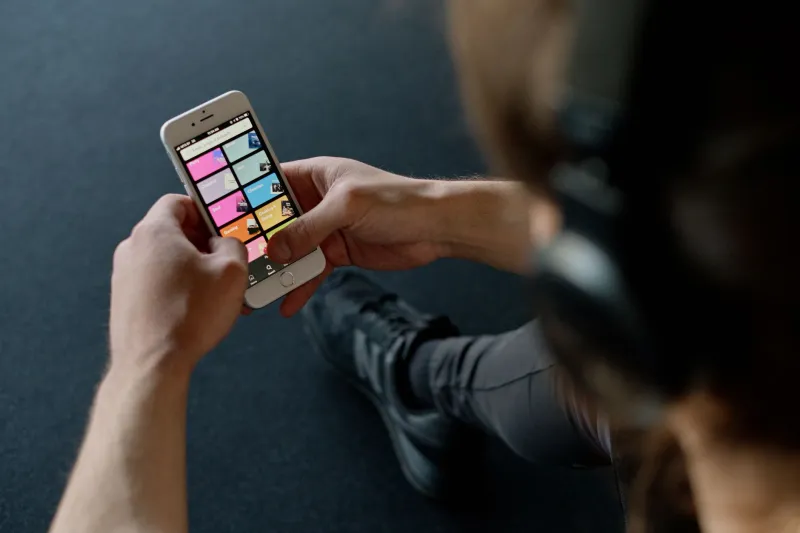
Apps like Strava, Fitbod, or even a simple notes app can serve as your scoreboard. The act of recording a new personal best, even a small one, triggers the same reward circuitry that novelty once handled for free.
Reframe What "Progress" Actually Means
Most people measure progress by the mirror or the scale, which are genuinely terrible short-term metrics. Body composition changes lag significantly behind fitness improvements, so if that's your only gauge, you're going to feel like nothing is happening right around week six — even when it is.
Shift your progress metrics to things that are actually changing in real time. Can you hold a plank longer than you could three weeks ago? Does the workout that used to leave you wrecked now feel manageable? Do you recover faster between sets? These are real, measurable improvements, and they're happening whether you can see them in the mirror or not.
Write them down. Seriously. Keeping a simple workout log — even just a few lines after each session — gives your brain tangible evidence of forward movement during the period when visual feedback is still catching up.
Change One Variable, Not Everything
A common mistake at the six-week mark is overhauling the entire routine because it "isn't working." This usually backfires. You lose the accumulated adaptation benefit of the program you've been running, and you start the novelty clock over again, which just means you'll hit the same wall at week twelve.
Instead, change one variable. Swap out a single exercise in your routine. Try a different workout time for two weeks. Add a new finisher to the end of your session. This introduces enough novelty to reactivate your brain's exploration reward without blowing up the consistency you've built.
Build a Commitment Device
Behavioral economists talk about commitment devices — structures you set up in advance that make it harder to bail when motivation dips. For home workouts, this can be as simple as scheduling your sessions on a shared calendar that a friend or partner can see, signing up for a six-week challenge through a fitness app, or putting money on the line through a platform like Beachbody or a fitness accountability group.
The key is that the commitment needs to exist before you hit the wall, not after. By week six, your motivation to set up accountability structures is already eroding. Do it at week two or three, when you're still feeling good about the routine.
Let the Routine Get Boring (On Purpose)
This one sounds counterintuitive, but stick with it. There's a difference between a workout feeling boring and a workout feeling pointless. Boring can actually be a sign of mastery — you've internalized the movements, your form is cleaner, and your body is adapting efficiently. That's not a problem to fix. That's progress.
Reframe boredom as competence. The goal of a fitness routine isn't to be constantly entertained. It's to build a body that works better over time. Some of the most effective training protocols are genuinely repetitive. Leaning into that — accepting the flat stretches as part of a longer arc — is a skill worth developing.
The Real Goal at Week Six
The six-week wall isn't a sign that home fitness doesn't work for you. It's a sign that you've successfully completed the easy part and you're now doing the harder, more important work of building an actual habit rather than riding a novelty wave.
Every long-term home fitness success story has a version of this moment — the point where it stopped feeling exciting and started feeling like a choice. That choice, made consistently, is what separates the people who are still training at month six from the ones who quietly stopped at week six and chalked it up to motivation.
You've got the setup. You've got the routine. Now you just need to know that the wall was always part of the plan — and you were always going to climb it.