Why the Gym's Secret Weapon Doesn't Work at Home (And What to Use Instead)
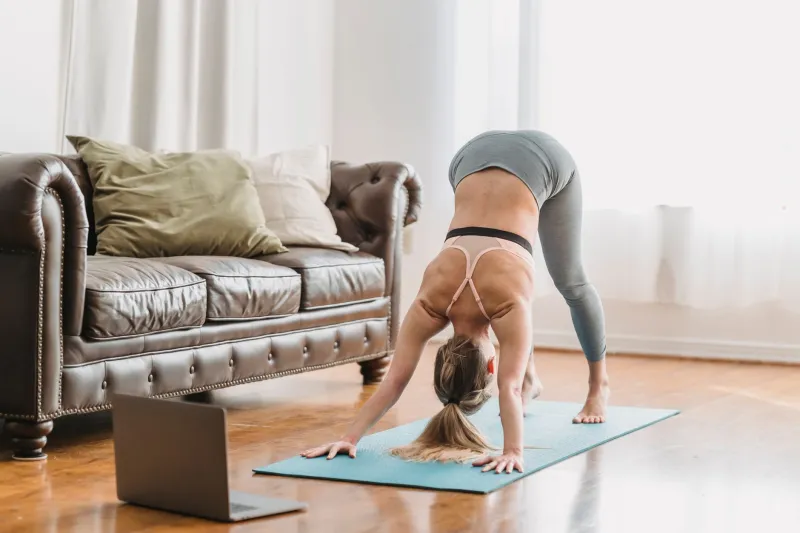
Here's something nobody tells you when you cancel your gym membership and set up a workout corner in your spare bedroom: you didn't just change your location. You accidentally dismantled an entire motivation system that was quietly doing a lot of heavy lifting on your behalf.
The gym, for all its crowded parking lots and overpriced smoothie bars, is actually an incredibly sophisticated psychological trap — and it's one that works in your favor. Lose that trap, and suddenly getting off the couch feels like a genuine negotiation with yourself. Every. Single. Day.
Understanding why that happens is the first step to building something better.
The Invisible Forces That Run Your Gym Habit
When you drove to a gym, three powerful psychological mechanisms were operating in the background whether you noticed them or not.
Social pressure was the big one. Other people were watching — or at least you thought they were. That low-grade awareness kept you moving, kept you from cutting sets short, kept you from leaving after 12 minutes because you got bored. Even introverts who hate being observed are influenced by it. Behavioral researchers call this the "audience effect," and it measurably improves physical effort.
Then there's sunk cost motivation. You paid for that membership. Maybe $40 a month, maybe $80. Skipping a workout meant wasting money, and the American brain finds that genuinely painful. That monthly charge showed up on your bank statement as a quiet little nudge.
Finally, environmental cues did more than you realize. Walking through those doors, smelling the rubber mats, seeing people mid-set — your brain learned to associate that specific context with effort. Neuroscientists call this "context-dependent memory," and it's why habits stick so much easier when they're tied to a consistent place.
At home? All three of those vanish. No audience. No sunk cost. And your "gym" is also the place where you watch Netflix and eat cereal on Sunday mornings. Your brain is genuinely confused about what's supposed to happen there.
The Accountability Gap Is Real — But It's Fixable
The mistake most people make is trying to replicate gym-style motivation at home. They buy expensive equipment hoping the sunk cost will kick in. They set up a mirror hoping the audience effect will return. It kind of works, for a while. But it's patching the wrong problem.
Home fitness accountability needs to be built differently — not borrowed from a gym model that depends on infrastructure you no longer have.
Here's what actually moves the needle.
Micro-Commitments Beat Grand Intentions Every Time
Forget the sweeping "I'm going to work out five days a week" declaration. That kind of goal lives entirely in your head, which means it dies entirely in your head when Tuesday gets complicated.
Micro-commitments are smaller, stupidly specific, and harder to wiggle out of. "I will do ten squats before I pour my second cup of coffee" is a micro-commitment. "I'll do a seven-minute core routine before my 9am Zoom call" is a micro-commitment.
The goal isn't to replace a full workout — it's to create a series of tiny tripwires that keep your body in motion even on days when full motivation is nowhere to be found. Research on habit formation consistently shows that frequency matters more than duration when you're trying to build a lasting behavior. Ten minutes every day beats sixty minutes twice a week, especially in the early stages.
Start with two or three micro-commitments and let them compound. You'll be surprised how often a "just ten squats" moment turns into a full session once you're already moving.
Track Progress Like You Mean It
At the gym, progress was somewhat visible. You'd see your numbers on a whiteboard, watch your lifts increase, maybe get a comment from a trainer. At home, progress disappears unless you deliberately surface it.
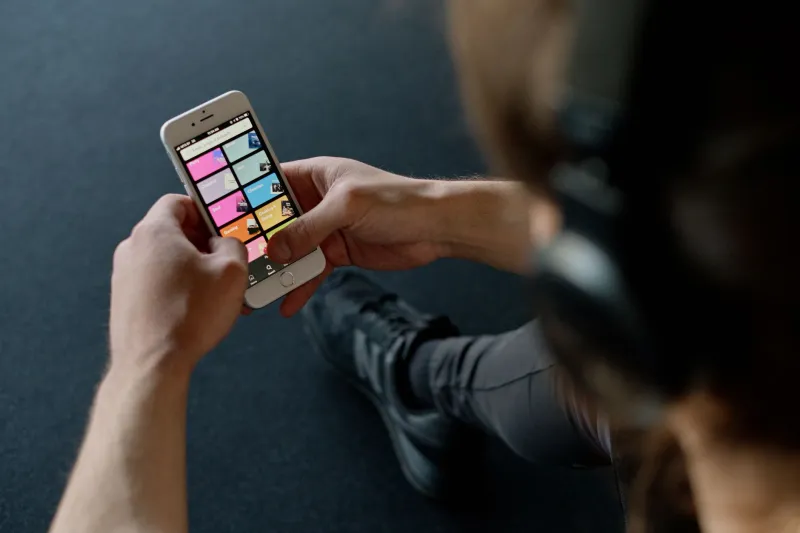
This is where tracking apps earn their keep. Tools like Hevy, Strong, or even a basic notes app create a paper trail of your effort that becomes its own motivational feedback loop. When you can scroll back and see that three months ago you were struggling with modified push-ups and now you're knocking out full sets, that's a meaningful reward — one you manufactured for yourself.
The key is consistency over complexity. You don't need a sophisticated system. You need a system that you'll actually use. Log the date, the movement, and the reps. That's enough to start seeing patterns and feeling the pull of not wanting to break a streak.
Build External Accountability Without Leaving Your House
One of the most underrated tools for home fitness is the accountability partner — specifically, someone who isn't in the same room as you.
This could look like a group text with two friends who are also training at home, where everyone posts a photo of their completed workout. It could be a Discord community (there are thousands organized around specific fitness goals). It could be a weekly check-in with a remote health coach. The format matters less than the commitment: there's another human being who will notice if you go quiet.
Social platforms like Strava, Fitbit's community features, or even a dedicated Instagram account for your fitness journey recreate a version of that audience effect without requiring anyone to physically see you sweat. The accountability isn't about performance — it's about the mild social discomfort of having to explain why you skipped leg day.
That discomfort, it turns out, is doing a lot of work.
Redesign Your Environment to Signal "Workout Mode"
Since your home doesn't automatically cue exercise the way a gym does, you have to engineer those cues yourself. This is more practical than it sounds.
Leave your workout clothes out the night before. Put your resistance bands on top of your laptop. Set a specific playlist that only plays during workouts so your brain starts associating those songs with movement. If you have a dedicated corner or room for training, try to keep it visually distinct — even a yoga mat that stays rolled out is a stronger environmental trigger than one stuffed in a closet.
The goal is to reduce the number of decisions standing between you and starting. Every decision is a potential exit ramp. Remove as many as possible.
The Bigger Picture
Home workouts don't fail because people are lazy or lack discipline. They fail because the invisible support structures of gym culture — the social pressure, the financial stakes, the conditioned environment — aren't there anymore, and nobody warned you to replace them.
Once you understand that, the fix becomes a lot less about willpower and a lot more about design. Build micro-commitments into your daily routine. Track your progress somewhere visible. Find a community that checks in on you. Engineer your space to signal effort.
You're not trying to be your own personal trainer. You're trying to build a system that makes the right choice slightly easier than the wrong one. Do that consistently, and the motivation problem mostly takes care of itself.