Stop Tracking Every Rep and Start Actually Showing Up: The Low-Surveillance Accountability Method That Works

The Problem With Being Watched — Even By Yourself
Somewhere along the way, the fitness world decided that accountability meant visibility. Log your reps. Post your progress. Let the app track your heart rate, your calories, your movement patterns. Share it to your story. Tag your gym buddy.
For some people, that works great. For a lot of us working out at home? It quietly kills motivation.
Research in behavioral psychology has shown that external monitoring — especially the kind tied to performance metrics and social visibility — can actually undermine intrinsic motivation over time. When you're working out because an app is watching you, you're not really working out for yourself anymore. And when the app glitches, or you miss a day and the streak breaks, the whole thing falls apart.
The good news: you don't need a camera, a leaderboard, or a fitness influencer checking your form to stay accountable. You just need a smarter system.
Why Most Home Accountability Setups Backfire
Let's be honest about what most people try first.
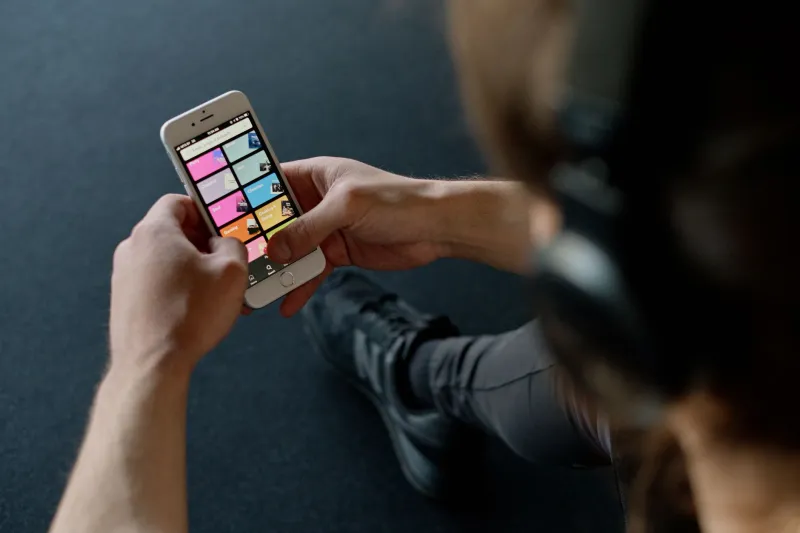
They download a workout app with streak tracking. They set up their phone to record themselves. They join an online challenge with weekly check-ins. These aren't bad ideas in theory, but they share a common flaw — they outsource your motivation to something external. The moment that external thing disappears or becomes inconvenient, so does your consistency.
There's also the surveillance fatigue factor. A lot of home workout folks specifically chose working out at home because they didn't want to be watched. Recreating that watched feeling in your living room defeats part of the purpose. If checking in feels like clocking in, resentment builds fast.
So what actually works instead?
The Workout Journal: Old School for a Reason
Before fitness apps, people kept notebooks. Turns out, handwriting your workouts creates a different kind of accountability than tapping a screen — one that's more personal and, for many people, more durable.
A workout journal doesn't have to be elaborate. A cheap spiral notebook works fine. The key is writing before and after each session, not just logging numbers. Before your workout, jot down what you plan to do and how you're feeling. After, write a sentence or two about how it actually went.
This two-sided reflection builds self-awareness instead of just data collection. You start noticing patterns — which days you show up strong, which excuses are recurring, which workouts leave you feeling energized versus drained. That knowledge is more useful than a step count.
It also creates a physical record of effort that has nothing to do with anyone else. Flip back through a few weeks of entries and it's hard to pretend you haven't been putting in the work. Or, if you haven't, it's equally hard to ignore.
The Commitment Text: Accountability Without an Audience
Here's a simple technique that sounds almost too low-tech to work: text one person before your workout saying you're about to do it, and text them again when you're done.
That's it.
No cameras. No posted videos. No shared app dashboards. Just a quick "about to do my 30-minute session" and a "done" twenty minutes later.
The psychology behind this is solid. Telling someone — even one person, even casually — what you're about to do creates a small social commitment. It's enough friction to make skipping feel like a conscious choice rather than a passive slide. And the follow-up text closes the loop, giving you a tiny hit of completion that reinforces the habit.
Your accountability partner doesn't need to be a fitness person. A friend, a sibling, a coworker who just agrees to be your check-in contact works perfectly. You're not asking them to coach you or evaluate your form. You're just creating a witness to your intention.
Environmental Design: Let Your Space Do the Nagging
One of the most underrated accountability tools is your environment. If your workout gear is buried in a closet and you have to excavate it every time you want to exercise, you're adding unnecessary friction to an already effortful habit.
Flip that around. Leave your yoga mat unrolled in your workout space. Set your resistance bands on top of your shoes the night before. Put your water bottle on the kitchen counter as a visual cue that tomorrow morning has a plan.
Environmental design works because it removes the decision-making step. Instead of asking yourself "am I going to work out today?" your space is already answering yes. The setup is done. The path of least resistance points toward action.
This is particularly effective for home workouts because you have full control over your environment in a way you never would at a gym. Use that control deliberately.
Scheduled Commitment: Treat It Like a Meeting You Can't Reschedule
Vague intentions don't survive contact with a busy week. "I'll work out sometime Tuesday" almost always loses to actual Tuesday.
Blocking your workout in your calendar — with a start time, an end time, and a specific description — changes its status from wish to appointment. It's a small mental shift, but it's meaningful. You wouldn't blow off a dentist appointment or a work call without rescheduling. Apply the same logic to your training.
If you work from home, this matters even more. The boundary between work time and personal time can get blurry fast, and workouts are often the first thing to get absorbed by an overrunning meeting or an unexpected task. A calendar block gives your workout the same protected status as anything else on your schedule.
The Weekly Review: Closing the Loop on Your Own Terms
Once a week — Sunday evening works well for a lot of people — take five minutes to look back at what you actually did versus what you planned. No judgment, just observation.
Did you hit your sessions? If not, what got in the way? Is there a pattern? What felt good this week? What do you want to adjust?
This kind of self-review builds the meta-skill of self-coaching, which is ultimately what sustains long-term fitness. You stop needing external validation because you've developed a reliable internal feedback loop. You become your own most useful accountability source.
That might sound abstract, but it's genuinely practical. People who understand their own patterns make better adjustments. They skip the guilt spiral and go straight to problem-solving.
You Don't Need to Perform Your Commitment
Here's the thing nobody says enough: accountability doesn't have to be visible to be real.
You can be deeply committed to your home workout routine without a single follower knowing about it. You can be consistent without a streak counter. You can make real progress without posting a before-and-after.
The methods above work precisely because they're built around your relationship with your own fitness — not an audience's relationship with your performance. And for home workout folks especially, that internal ownership tends to stick a lot longer than anything a camera or an app can manufacture.
Show up for yourself. Write it down. Text your person. Set up your space. Block the time. Check in at the end of the week.
No cameras required.