Your Living Room Is Wrecking Your Form — Here's the Doorway Drill That Fixes It
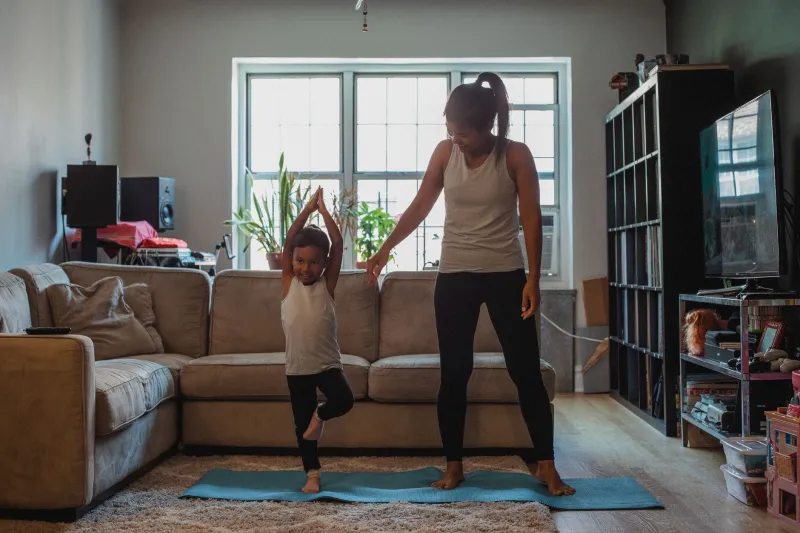
Here's something nobody tells you when you cancel your gym membership and commit to working out at home: your house was not designed with biomechanics in mind. The gym — for all its crowds and parking hassles — at least had mirrors, flat rubber flooring, and equipment calibrated for human movement. Your living room has a sectional sofa, a coffee table at shin height, and a TV that's slightly too high on the wall.
That setup matters more than you'd think. And if your progress has plateaued, or you've been nursing a nagging shoulder or low back issue you can't quite explain, your home environment might be the silent culprit.
The Posture Problem Nobody Talks About
Gym-goers have mirrors. Home exercisers have vibes.
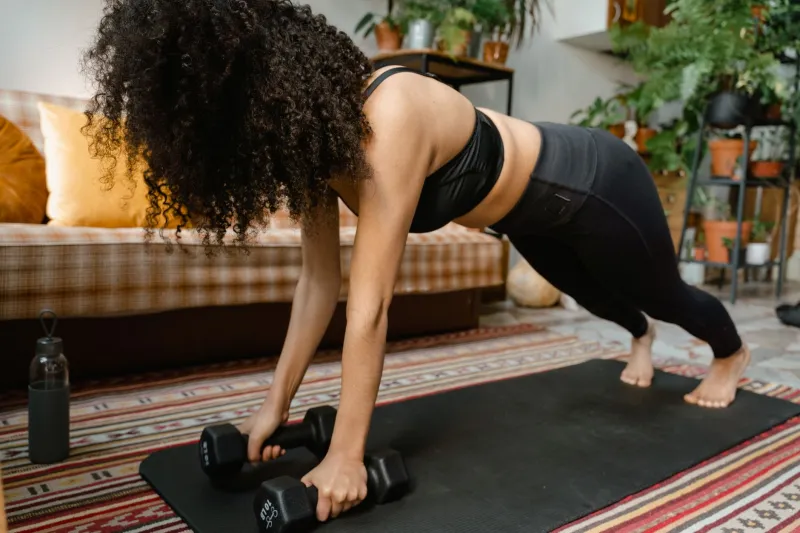
Without visual feedback, most people default to the posture they've been marinating in all day — which, if you're a remote worker, means forward head, rounded shoulders, and a pelvis that's basically forgotten what neutral feels like. You sit hunched at your desk for six hours, then drop to the floor for push-ups in the exact same shape. You're not working out; you're just doing desk posture at a higher heart rate.
The research backs this up. Studies on sedentary adults show that prolonged sitting causes measurable inhibition of the glutes and hip flexor tightening — a combination that researchers sometimes call "gluteal amnesia." When you then attempt squats, lunges, or deadlifts without addressing those patterns first, you're loading a compensating body. That's how minor aches become actual injuries.
But home workouts introduce a few extra wrinkles that gym science doesn't fully account for.
Home-Specific Positioning Mistakes You're Probably Making
Screen glare and the forward head creep. If you're following a workout video on a laptop propped on your coffee table, there's a good chance you're craning your neck downward or forward to see the screen. Over the course of a 30-minute session, that subtle chin-jut adds up. Your cervical spine is under load in a position it shouldn't be, and your upper traps are working overtime just to keep your head up during movements that should be freeing those muscles.
Furniture layout forcing asymmetrical setups. Not everyone has a clear 6x6 patch of floor. Most people are angling their yoga mat around the ottoman, stepping slightly to the left to avoid the dog bed, or doing lateral movements in a truncated range because the bookshelf is right there. These micro-adaptations create real asymmetries. Your body learns to move differently on each side, and muscle imbalances follow.
Soft surfaces undermining your base. Carpet feels comfortable but it's not a neutral surface. It shifts underfoot during single-leg work, subtly destabilizing your ankles and knees in ways that hard gym flooring wouldn't. If you're doing balance work or heavy lower body exercises on thick carpet, your stabilizer muscles are fighting the surface instead of supporting the movement.
Low lighting and proprioceptive confusion. This one's underrated. Good proprioception — your body's sense of where it is in space — is partly visual. Dim rooms or high-contrast lighting from a single source (like a window behind you) make it harder for your nervous system to orient itself. You may notice wobblier single-leg stands or less confident movement patterns in poorly lit spaces. That's not weakness. That's your brain lacking the visual anchors it uses to calibrate position.
The Five-Minute Doorway Fix
Here's where it gets practical. You don't need a foam roller collection or a posture coach on retainer. You need a doorframe and about five minutes before every workout.
Step 1: The Doorway Chest Opener (90 seconds) Stand in a doorway and place both forearms on the door frame at a 90-degree angle — upper arms parallel to the floor, elbows bent. Gently step one foot forward and let your chest fall through the opening. You should feel a stretch across your pecs and the front of your shoulders. Hold for 30 seconds, breathe deeply, and repeat twice. This directly counters the rounded-shoulder pattern from desk work and primes your scapulae to move properly during pushing and pulling exercises.
Step 2: The Wall Slide (60 seconds) Stand with your back flat against the wall — heels, glutes, upper back, and the back of your head all touching. Raise your arms into a goalpost position against the wall and slowly slide them overhead, keeping contact the whole way. If your lower back arches off the wall or your arms lose contact, stop there. This reveals exactly how much thoracic mobility you're working with and begins to train scapular upward rotation, which is critical for any overhead movement.
Step 3: Hip Flexor Reset Using a Chair (90 seconds) Kneel on a folded towel with one knee on the floor and the opposite foot forward in a half-kneeling position, using a chair beside you for balance. Tuck your pelvis slightly (posterior tilt) and shift your weight gently forward until you feel a stretch at the front of the back hip. Hold 45 seconds per side. This directly addresses the hip flexor tightening from prolonged sitting and wakes up the glutes before lower body work.
Step 4: Screen Positioning Check (30 seconds) Before you hit play on your workout video, take 30 seconds to elevate your screen to eye level. Stack some books under your laptop. Move your tablet to a higher surface. This single adjustment reduces cervical strain during your entire session and keeps your spine in a more neutral position throughout.
Small Fixes, Compounding Results
None of this is complicated, and that's kind of the point. The beauty of working out at home is that you control the environment — but only if you're intentional about it. Gyms have infrastructure built in. At home, you have to build it yourself.
Five minutes of targeted prep work changes the movement patterns you bring into every rep, every set, and every session. Your body doesn't know it's at home. It just knows whether it's moving well or compensating. Give it the setup it needs, and the results you've been chasing get a whole lot closer.